11 September 2026
R&D NESTER PRESENTS CARBON ACCOUNTING RESEARCH AT ICEER 2026
R&D Nester is developing research methodologies to support transparent and consistent carbon accounting for electrical equipment used in power systems. This work addresses the growing need to reconcile voluntary product-footprint instruments, such as Environmental Product Declarations (EPDs), with regulatory mechanisms such as the European Union Carbon Border Adjustment Mechanism (CBAM). It also examines how carbon footprint evidence generated across different jurisdictions can be assessed for comparability. The research was developed in cooperation with the China Electric Power Research Institute (CEPRI).
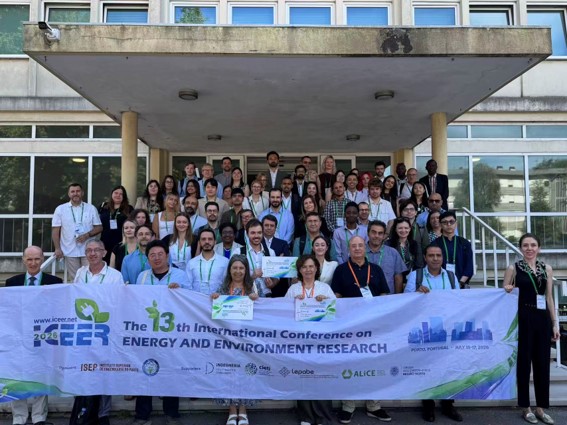
As a result of this work, the R&D Nester team presented two scientific papers at the 13th International Conference on Energy and Environment Research (ICEER 2026), held in Porto, Portugal, from 15 to 17 July 2026 under the theme Foundations of Sustainability.
The first paper, "Mutual Recognition of Electrical Equipment Carbon-Footprint Evidence under CBAM: Renewable Electricity Procurement and Carbon-Market Comparability in the EU and China", analyses the conditions under which renewable-electricity and carbon-pricing evidence from the EU and China may be recognised for CBAM-related purposes. This study compares EU Power Purchase Agreements (PPA) with Chinese Green Power Trading arrangements, and the EU Emissions Trading System (ETS) with China's National Carbon Market. It concludes that formal similarity between instruments is not enough: recognition depends on verifiable physical delivery, time-matched metering, contractual traceability, and evidence of a carbon price effectively paid and attributable to the relevant emissions.
The second paper, "Harmonized Carbon Accounting of Electrical Equipment in Power Systems: A Framework Integrating EPD and CBAM Carbon Accounting Methodologies", compares the carbon-accounting rules of EPDs and CBAM and proposes a structured framework for reusing EPD life-cycle inventory data in CBAM-oriented assessments. Applied to power transformers, circuit breakers, and gas-insulated switchgears, the study shows that EPD results are often dominated by use-phase impacts, whereas CBAM focuses on production-stage emissions and emissions embedded in relevant precursors. The framework supports screening, mapping, and data-gap identification, while highlighting that compliance-ready CBAM reporting still requires installation-specific, auditable data and traceable precursor evidence.
Together, the papers contribute to improving interoperability between product carbon-footprint methodologies and regulatory carbon accounting, strengthening R&D Nester's expertise at the intersection of electrical engineering, life-cycle assessment, and European carbon policy.
ICEER 2026 brought together engineers, researchers, and specialists from academic institutions, research centres, and industry to discuss recent advances in energy, environment, and education for sustainable development. The conference was jointly organized by the School of Engineering of the Polytechnic of Porto (ISEP/P.Porto) and SCIEI.